Pages For Salvador Bahia Brasil Resources for Travel in Brazil

Saturday

FOOD FROM BRAZIL: MOORISH INFLUENCE

The food from Brazil is just as interesting and diverse as the people and landscape of this thriving melting pot.  There has been heavy influence from the various immigrants to the country as well as the indigenous population.

food from brazil


This post will focus on the heavy Moorish influence on Brazilian cuisine coming from an interesting mix of Portugal, African slaves, and Arab immigrants.  Portugal at the time of the colonization of Brazil was a nation recovering from a lengthy period of Moorish occupation. Many of the colonist were Christianized Moors, or moriscos.  Also, a little known fact is that Brazil has the largest Arab population outside of the Middle East.

The Moorish Influence on Food From Brazil


The Moorish influenced remained in Portuguese culture as evident in the cuisine and language.  Many Portuguese words have Arabic roots such as orange (laranja in Portuguese; from the Arabic naranj نارنج) and rice (arroz in Portuguese; from the Arabic al-ruzz).  Both rice and oranges were brought to Spain and Portugal by the Moors.

The Arab influence is so deeply embedded in to Brazilian culture that most do not realize how prevalent it is. It has just been integrated as Brazilian.  In the main Brazilian cities it is easy to find restaurants that cook Arabic food such as sfihas (Portuguese esfirra), tabbouleh (Portuguese tabule), kibbeh (Portuguese quibe), hummus, tahina and halwa are very well known among Brazilians.

Brazilian mainstays such as cuscuz arrived via African slaves.  Cuscuz is a popular dish in Bahia, Brasil.
Couscous is actually the national dish of Morocco.  The term Cuscuz, also spelled cuscus and cuzcuz in Portuguese, refers to several preparations in different regions of the country. The origin of the plate is certainly the Middle Eastern couscous, but once it was introduced to the new tropical culture, several versions using local ingredients began to develop.
cuscuz food from brazil

cuscuzeira bahia brasilIn Bahia, Brasil Cuscuz can be a plain, steamed, cake-like cereal made with flocos de milho pré-cozidos (yellow, precooked corn meal - “Milharina”, by Quaker, is a very well known brand). Usually served for breakfast, it’s made in the cuscuzeira, or cuscuzeiro (see picture), a steaming pan that has a perforated metal disc with a handle that seats on top of simmering water where you place the corn meal, previously moistened with salt water.
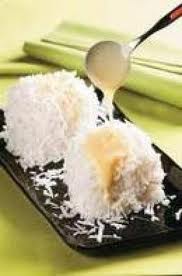
cuscuz de tapioca in bahia brasil 
Then, there’s cuscuz de tapioca, a sweet, flan-like version of the dish made with manioc/yucca tapioca pearls, coconut and condensed milk.  Source


kibe with hummus food from brazil 


kibe arabic food from brazil Kibe/Quibe: extremely popular, it corresponds to the Lebanese dish kibbeh and was brought to mainstream Brazilian culture by Syrian and Lebanese immigrants. It can be served baked, fried, or raw.  It is stuffed with meat or hummus.
esfiha arabic food from brazil 


Esfiha (Arabic: sfiha): another Middle Eastern dish, despite being a more recent addition to Brazilian cuisine they are nowadays easily found everywhere, specially in Northeastern, Southern and Southeastern regions. They are pie/cakes with fillings like beef, mutton, cheese curd, or seasoned vegetables.


tabouli food from brazil arabic
Tabouli is another fixture at salad bars.

West African Flavor of Food From Brazil


The African hand in the Brazilian cooking pot completes the triptych, most noticeably in the northeastern states, where the plantation system held greatest sway. There, from virtually the inception of colonization, Africans were in control of the kitchens of the Big Houses. In Bahia, Brasil they were from the Bight of Benin and the Sudanese regions of West Africa. In Rio and Pernambuco, they were mainly Bantu. All brought their own tastes in food.
baiana cooking bahia brasil influence
This baiana in Bahia, Brasil is preparing acaraje and has cuscuz as well as cuscuz de tapioca

food from brazil acaraje from bahia brasil
Acaraje, the Brazilian falafel
The religious traditions of the African continent crossed the Atlantic as well, and in the hands of the Big House cooks, many ritual dishes were secularized and joined the culinary repertoire. The akara, a bean fritter fried in palm oil by the Yoruba people of southwestern Nigeria, was transformed into the Brazilian black-eyed pea fritter, or acaraje; fon akassa changed only its spelling to become the acaca, and the Angolan cornmeal porridge known as funji kept its name and its spelling as the dishes of the African continent were turned into Brazilian standbys.


African cooks embellished dishes with ginger, chilies, and pulverized cashew nuts and maintained the tastes of coastal Africa in the continued use of dried smoked shrimp and palm oil. They adapted recipes and adopted the ingredients of the new land to create a cooking so unique that the food of the state of Bahia is considered by many the linchpin that connects the cooking of Africa with that of the Western Hemisphere.
Source
food of Bahia Brasil


Check out the article below from Islamictourism.com:

Food From Brazilian with an Arab touch

Islamic Tourism – Issue 34 – March-April / 2008

By  Habeeb Salloum

In the world of culinary art, Brazil is to Portugal what Mexico is to Spain. These two colonies
in the New World were the crown jewels of their respective motherland. However, in their
cuisines, both carrying deep Arab influences, there is a difference.

Even though many of the original colonists in both countries were Moors newly converted to Christianity, in Brazil, a huge number of African slaves were imported to work on the plantations. A good number were Muslims and their food was saturated with North African influences. The 20th century Arab immigrants to the country added another dimension to Brazilian food. Hence, the Moorish heritage of the Portuguese

Sunday

Salvador International Airport


Here is a link to a very helpful site about the Salvador International Airport.

http://www.aeroportosalvador.net/en/salvador-airport-guide

There is a mall in the airport as well as two cambios (foreign exchange stores).  Banco do Brasil, the central bank in Brazil also has a branch in the mall.  The Federal Police have a station located near the airport entrance.

There are plenty of restaurants, travel agencies, and pretty much anything else you may need upon arriving or passing thru the Salvador airport.

As long as you aren't trying to smuggle in anything illegal you should have a pretty pleasant and relatively easy trip.  The airport is fairly modern and convenient.  ALL of the Policia Federal detectives speak fluent English.  Don't let them fool you, LOL.

They want you to at least try to speak Portuguese and many times will not let it be known that they speak English however they do or else they would not be working at the airport station.  Just wanted to share that because anyone who stays longer than 90 days will have to visit the Policia Federal at the airport to get show them their visa.

These bamboo trees form a tunnel at the entrance to Salvador's airport.

Saturday

HOW TO CALL IN BRAZIL (LOCAL AND INTERNATIONAL)

phone call in brazil


Dialing Instructions

Brazil City Codes for Customers Dialing From Brazil

Local Calls While in Brazil (Vivo's network) to a Landline or Cellular Number:
Dial the local subscriber's number (7 or 8-digit length).

To Call US while in Brazil: 00 + Long Distance Provider Code (15) + 1 + 123-456-7890.

National Calls While in Brazil (Vivo's network):

0 + long distance code + area code + telephone number (e.g. 0 + LD + 2-digit area code + 7 or 8-digit telephone number).

International Call While in Brazil (Vivo's network) to Another International Destination:
00 + long distance code + country code + national destination code +telephone number (e.g. 00 + LD + variable length CC + variable lengthNDC + variable length telephone number).

Emergency Number While in Brazil:
190 (Police) and 193 (Fire station).

BRAZIL & SEX TOURISM

brazil girls

salvador bahiaBrazil is a very alluring, sexy place.  The people, land, and the culture are all very enticing and sensuous.  I mean for example where else can you hop on a boat and be at an exotic, tropical island in about 30 minutes?  My wife and I for example can have the whole beach to ourselves where we get to feel like we are the only people in the world.

brazilian women at beachI'd be lying if I didn't acknowledge this simple fact.  The first thoughts that come to mind when people around the world think of Brazil are exotic and sexy.  Maybe you can throw soccer in there too, lol.

There is an industry built off of international visitors, mainly from Europe, North America, and Australia, who come here for sex.  They come from other places too but those are the main areas.


black in brazil
I am not knocking this activity or promoting it.  I just thought I'd

Friday

BAIA DE CAMAMU: PARADISE IN SOUTHERN BAHIA

paradise south of salvador bahia
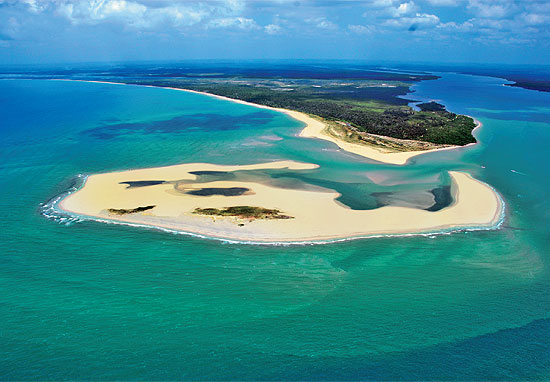
Gorgeous and peaceful, Baía de Camamu, on the coast of the state of Bahia, Brasil is a place in which to bathe in the sea, relax and taste some lobster or shrimp. A refuge that fortunately remains protected.

André Silva, special for ANBA*

bahia brasil camamu paradise
source: www.1000dias.com
Camamu – A narrow strip of sand that seems like it may be submersed any second, marks the meeting between Baía de Camamu’s (Camamu Bay) peaceful waters and the stronger waves of the Atlantic Ocean. A framework of wood and straw beams is the only sign of human occupation at Coroa Vermelha (Portuguese for Red Crown), as the bay’s locals dubbed this sand strip. This desolate small island, a good spot to take a swim in the sea, bears witness to one of the main attractions of Camamu’s: the resistance of beaches, groves and islands in this Southern Bahia refuge to human occupation.


Coroa Vermelha could look altogether different. The locals explain how the island was purchased years ago by a famous singer in an axé music group (a typical local rhythm) who tried to build a mansion there. The

Thursday

Brazil World Cup Countdown


Well the World Cup is officially less than two weeks away.

I meant to put this post out a few months ago but I forgot to hit publish, lol

With the start of the World Cup a few months away (starts June 12th), FIFA says it will not pay some of Brazil's World Cup bills even though it admits the local organizers' failure to fulfill their commitments may jeopardize the tournament's success.


The protests are still going on.


Military presence is pretty heavy.


 Clock is ticking.

Brazil is going to do it their way.

Stop worrying about it.  Everything is going to be alright.

World Cup Time | Official Song Feat Pitbull J Lo and Claudia Leitte | We Are One


 The World Cup is Here!
Check out the Official 2014 FIFA World Cup song


Claudia Leitte looks great!  I'm glad they got an artist from Salvador da Bahia.  I know she was born in Rio but Bahia is where she came up and developed her style of music.

I'm not even going to mention the alleged "backlash" from World Cup fans over the video which was shot in Fort Lauderdale, Florida (a great city, I used to live there).  It might has well have been shot in Brazil.  You know why?  Because South Florida is Brazil.  South Florida is a combination of Latin America, the Caribbean, and the Mediterranean with a little dash of the US thrown in.

I used to hear people on the street speaking Brazilian Portuguese all the time.  So back to the World Cup.  It looks like Brazil is ready to shine despite all of the protests and other hold ups.

I'm glad for Brazil.  This is a great opportunity to show its dynamic culture and take control of the perception of the country on a global scale.  The eyes of a billion people will be on this wonderful country this summer.

You Might Also Like:

Related Posts Plugin for WordPress, Blogger...